Issue 15 · 2026-11-28 · 8 headlines · 5 min read
Hidden AI use, and nobody agrees how to see it
The hard question about AI in teaching has moved from whether students use it to whether anyone can see it. This week a candidate sat South Korea's national exam wearing smart glasses, a survey found students say others misuse AI far more than they do, and detector flags landed on professors and a provost.
In this issue
Three things now hide AI use: a device in the exam room, a student's own answer on a survey, and a detector score nobody agrees how to read. If you teach this term, none of them can serve as proof, so the evidence has to come from how you design the assessment. Two other stories show who is deciding campus AI spending, and the week's biggest research claims, as usual, come from the people who made them.
01
The exam room has a new hiding place
On 19 November a candidate in Cheonan was caught using smart glasses in the maths section of South Korea's Suneung college entrance exam and later admitted it, according to SBS. The education ministry reported 111 electronic device violations, including five involving device use. Applicants at Yonsei and the University of Seoul were caught swapping ordinary glasses for smart ones, and National Taiwan University disqualified a medical-school applicant in June. In Pune, officials found no evidence that two barred students used the devices to get answers, so not every case is cheating. James Yoonil Auh argues for two-stage assessment: one stage tests unaided competence, the other tests work done with AI. Decide which of your assessments is which, and say so.
02
Neither the student nor the detector is a witness
Dartmouth economist Bruce Sacerdote and a colleague surveyed 1,003 US college students in a working paper that is not yet peer reviewed. 23 percent said they use AI to draft essays, while 54 percent said peers do. 8 percent said they paste AI text into assignments, while 50 percent said peers do. The paper cannot say whether students understate their own use or overestimate others', but either way a policy built on self-report rests on weak evidence. Detector scores are no firmer. Inside Higher Ed recounts Berkeley's Zvezdelina Stankova defending an opinion piece after Pangram rated it 33 percent AI-generated, SSRN removing Nicholas Polson's articles after he said he used a language model on hundreds of papers, and Dartmouth's provost resigning after Pangram flagged his writing. Semafor's Reed Albergotti called the reaction a "shame-and-blame witch hunt". The article finds no consensus on acceptable AI-assisted writing.
03
Procurement is deciding campus AI
The University of California announced another OpenAI deal on Thursday to give students ChatGPT, though a spokesperson says the purchasing amendment is not final, and the UC Academic Council wrote last month that it was not properly consulted. California's community colleges are asking the state for $21 million for a more independent AI network, and UC San Diego already runs its own TritonGPT. Its AI strategy director says open-weight models, whose files anyone can download and run, suit most users, though heavy users may need commercial ones. In Indiana, Lilly Endowment grants of $8.5 million to Indiana State and $12 million to Vincennes will fund campus AI plans. Ask whether your governance body sees such decisions before they are announced.
04
The counter-current: makers marking their own work
OpenAI's protein-design preprint reports that 35 of 322 minibinders (10.9 percent) showed binding in lab tests with its partner Onava, that full structure prediction remains a weakness, and that specialized models still filtered the candidates. Google DeepMind's mass-spectrometry plugin identified the exact molecule in about 97 percent of attempts on 100 compounds, in its own evaluation, and cannot tell mirror-image molecules apart. OpenAI's chief scientist proposes perplexity, a measure of how well a model predicts text, as a shared progress and safety yardstick; the post is not peer reviewed. All three are self-announced, so treat them as claims awaiting outside tests.
05
One thing to try this week
Pick the assignment you are least confident about and rewrite it so that an AI assistant cannot complete it for you. First paste that assignment into a chat assistant and read the attempt it makes, because that attempt is the diagnosis of what the assignment currently measures. Then change one thing in the task itself: add a live or spoken defence, require your own data or your own room, or ask for the reasoning as well as the answer. Finally add one sentence to the syllabus saying what students may and may not use for this specific assignment, and why. About 20 minutes.
Rewrite one assignment so AI cannot do it for them
One redesigned assignment that still measures what you care about, plus the syllabus sentence that goes with it.
Every student now has a capable assistant with no usage limit. An assignment that a model can complete in thirty seconds is no longer measuring what you think it measures, and finding that out in December is worse than finding it out now.
The steps
- Pick the assignment you are least confident about. Paste the full text of it.
- Run the prompt below and read the model's own attempt at your assignment first. That attempt is the diagnosis.
- Choose one of the redesign options it offers, or combine two, and rewrite the assignment yourself.
- Add a sentence to your syllabus saying what students may and may not use for this specific assignment, and why.
The prompt
Above is an assignment from my [SUBJECT] course for [LEVEL] students.

Do three things, in order.

First, actually complete the assignment as a capable student with an AI assistant would, at whatever length is realistic. Do not describe what you would do; do it.

Second, tell me honestly what that attempt reveals: which of my stated learning outcomes it satisfied without the student doing the thinking, and which it could not fake.

Third, give me three redesign options that keep the outcomes intact but make the work harder to outsource. For each, say specifically what changes, what it costs me in grading time, and what it costs the student in effort. Prefer options that use in-class discussion, the student's own data or experience, staged drafts, or a spoken component.
Costs nothing
Free ChatGPT or Claude.
Before you do
Redesign for what you want to measure, not for detection. AI-detection tools are unreliable enough that acting on them can be unfair to a student who did their own work.
What the field is saying
When AI use cannot be seen, who should decide what counts as acceptable: the institution, the instructor, or the design of the assessment?
Smart glasses make hidden AI help hard to rule out, so assessments should be split into one stage testing independent competence and another testing AI-mediated competence, with students asked to verify or critique AI-generated solutions.
Read it ↗Their working paper, not yet peer reviewed, finds students report far less potentially harmful AI use for themselves than they attribute to peers, so what students say about AI use differs sharply by whose use is being described.
Read it ↗He rejects AI in his own writing, part of a push by selective institutions to keep AI out of core writing.
Read it ↗UCLA is unlikely to adopt a university-wide AI policy because professors have varied educational goals, so it issued principles and lets each instructor allow, restrict or prohibit AI.
Read it ↗Where it lands
The view with no support this week is that a student's self-report or a detector score can establish what happened, and many procedures quietly rest on it: Sacerdote's gap shows self-reports diverge from reports about peers, and the Inside Higher Ed cases show detector flags becoming resignations and removals without agreed norms. What stays open is whether the answer sits with the institution, the instructor or the assessment, with Auh and UCLA pointing to the last two.
Threads we have been following
The claims this briefing has already made, and how they have held up since.
Issue 12 · 2026-11-06
We said: Issue 12 said campus AI rules written for students now reach staff after Dartmouth's provost resigned over AI use in his writing, and asked whether other universities would apply student disclosure rules to staff or whether Dartmouth would stay a one-off.
The Inside Higher Ed account of the witch-hunt debate, told above, says it has not stayed one case: Berkeley's Stankova, Chicago's Polson and Dartmouth's provost all drew scrutiny. But those are detector flags and a preprint-server removal, not universities applying their student rules to staff, and the article says no consensus exists on acceptable AI-assisted writing. Scrutiny is spreading faster than policy.
Issue 14 · 2026-11-20
We said: Issue 14 said AI is checking research now and the checks need checks, and held that a Lean file anyone can run is a sturdier check than a vendor's benchmark table.
Nothing this week settles the Lean checking of the Riemann Hypothesis claim, so that watch line stays open. The week's new research claims are the weaker kind: OpenAI's protein preprint and DeepMind's mass-spectrometry plugin are results their makers report, though OpenAI's includes wet-lab binding tests with a partner, where 35 of 322 designs bound.
What practitioners reported
Posted by university staff in named academic communities. Quoted by role rather than by name, and never counted into a proportion.
A professor reported that a philosophy department banned AI use outright, including the brainstorming and editing uses students often cite after being caught, and a replying professor asked how such a ban could be enforced.
“But how will they enforce it? At least we have a school standing up to AI officially.”
A professor described the institutional workaround of citing academic integrity rather than AI when penalising suspected AI work, because AI use is hard to prove.
“My university has the same policy. We never say it's AI; we claim it's for academic integrity.”
A professor found themselves cited as a source in a student newspaper piece for words they never said, and a replying professor urged a retraction request and an academic misconduct case.
“I would feel icky enough about this to try to get a formal retraction published from the student newspaper and I would also seriously consider filing an case with whatever honors/academic court the school has if the person is still a student there.”
An academic said they permit AI in assignments but grade only the student's own contribution, which makes the assessment rather than detection carry the judgment.
“About the grading, well I usually tell students that they *can* use it in their assignments, but they will be evaluated on their own contribution.”
The week in full
The past 8 days, weighted by what each story asks of you.
 On campus·University World News·2026-11-26Act
The next internet revolution is entering the examination hall
A candidate taking South Korea’s College Scholastic Ability Test (Suneung) on 19 November 2026 was caught using smart glasses during the maths section in Cheonan and later admitted using them, according to SBS. South Korea’s education ministry reported 111 electronic device violations, including five involving device use. Earlier, candidates at Yonsei University and the University of Seoul were caught switching from regular eyeglasses to smart glasses during admissions exams. Similar cases were reported at National Taiwan University, which disqualified a medical-school applicant in June, and at Symbiosis Institute of Technology in Pune, India, where two engineering students were barred in May, though officials found no evidence they used the devices to obtain answers. The College Board’s SAT rules and ACT test-day rules prohibit smart glasses, and the University of Glasgow’s 2026 assessment guidance distinguishes assessments for unaided knowledge from those where generative AI may be used. The commentary argues for two-stage assessments that test independent competence and AI-mediated competence.
Smart glasses make it harder to tell whether a submitted answer reflects a student’s own reasoning or hidden AI assistance. Faculty should clarify which assessments require unaided knowledge and which permit AI tools, and consider designs that ask students to verify or critique AI-generated solutions.
 On campus·Santa Barbara Independent·2026-11-26Watch
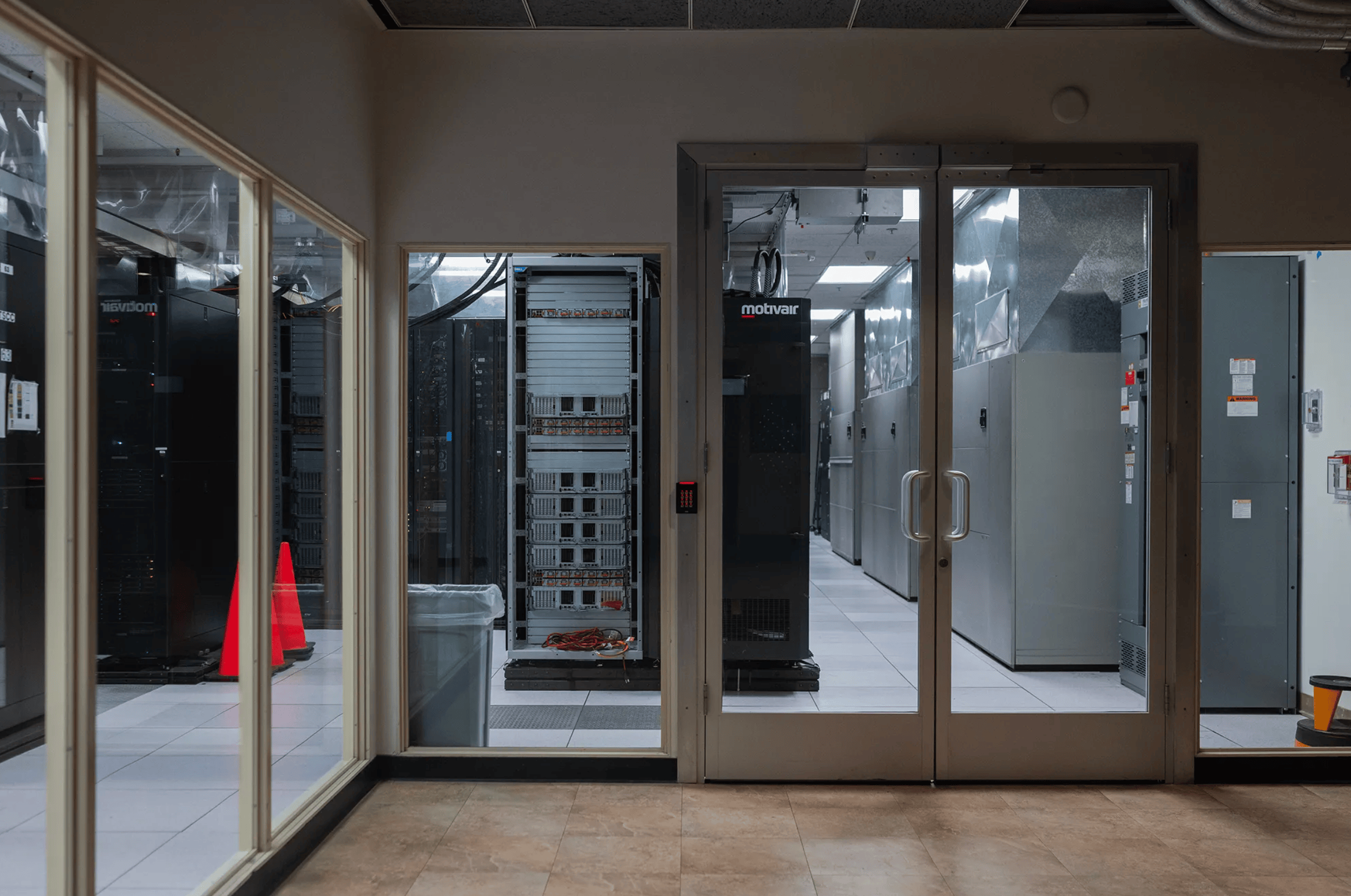
Why California’s Universities Are Setting Up Their Own AI Data Centers
California higher ed is weighing in-house AI data centers and alternatives to ChatGPT, which could change campus tools, costs and data control.
- New and changed·Google DeepMind·2026-11-25Own announcementWatch
Identifying Molecules with Mass Spec Skills for Antigravity
Google DeepMind's Mass Spec Skills let chemists automate mass-spectra interpretation; 10,000 scientists can apply for free top-tier Antigravity access.
 Easy to miss·Inside Higher Ed·2026-11-25Watch
Students Say They Don’t Use AI in Harmful Ways, but Peers Do
Students underreport their own harmful AI use while assuming peers cheat more, so faculty should rethink AI policies and assessment.
 On campus·WTHI·2026-11-25Watch
Indiana State, Vincennes University receive Lilly Endowment grants for AI
Indiana State and Vincennes will expand AI in curriculum and operations after $8.5M and $12M Lilly grants.
Other accounts: Indiana University receives $25M from Lilly Endowment to drive AI innovation, News at IU.
 Easy to miss·OpenAI·2026-11-24Own announcementWatch
GPT-6 models demonstrate intrinsic protein-design capabilities
OpenAI’s preprint shows GPT-6 can design proteins, signaling AI’s growing role in biology research and biosecurity oversight.
 New and changed·Hugging Face·2026-11-23Watch
RoboTrack: Point tracking for real-world robotic manipulation
Off-the-shelf point trackers fail on real robot manipulation; Ai2's new benchmark and released models close the gap.
 On campus·Inside Higher Ed·2026-11-24Watch
What’s Really Fueling Higher Ed’s AI “Witch Hunt”?
Faculty using AI in writing should disclose it and expect scrutiny as institutions enforce integrity norms without clear rules.
6 more stories ran this week; this issue's page lists them.
New in the library
New28 resources added since issue 14
Catching up
These ran earlier than this week and still matter — 1 story worth a minute of scanning.
 OpenAI·8 days agoOwn announcement
Perplexity and Intelligence
OpenAI proposes perplexity as a shared AI progress and safety limit metric, signaling future compliance norms faculty researchers should watch.
Where to go next
The brief is the week. These three are everything behind it.